




revolutionary pathmind master: In the realm of natural language processing and knowledge representation, the paper “PathMind: A Retrieve-Prioritize-Reason Framework for Knowledge Graph Reasoning with Large Language Models”, introduces a novel framework that combines the strengths of large language models (LLMs) with knowledge graphs (KGs). This innovative approach enables more effective reasoning over complex relationships and entities, significantly enhancing LLMs’ ability to draw inferences from structured data.
Understanding Revolutionary pathmind master
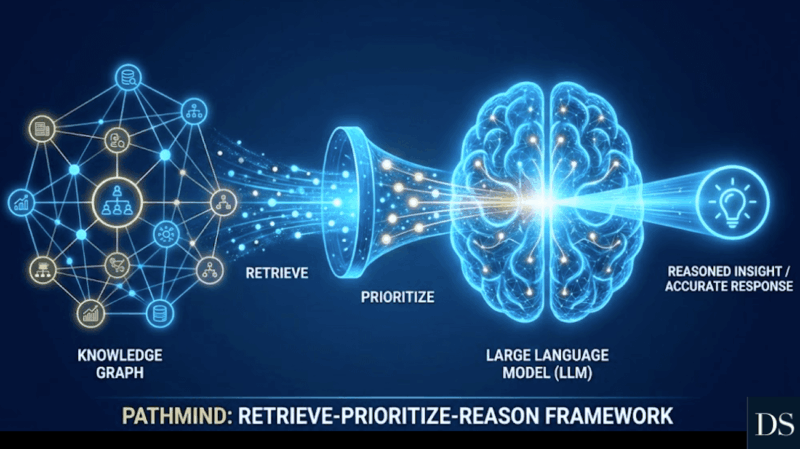
The key innovation of PathMind lies in its Retrieve-Prioritize-Reason (RPR) framework, which systematically integrates retrieval mechanisms with reasoning processes. By leveraging KGs, PathMind allows LLMs to access structured information dynamically, thereby improving their ability to generate accurate and contextually relevant responses. This is particularly important as traditional LLMs often struggle with factual consistency in knowledge-intensive tasks. When considering revolutionary pathmind master, it’s important to understand the key aspects.
Key Revolutionary pathmind master Benefits
PathMind operates through three main stages: retrieval, prioritization, and reasoning. In the retrieval stage, the framework identifies relevant entities and relationships from a knowledge graph based on the input query. This is achieved using a combination of semantic search techniques and embeddings that represent both the query and the graph data.
Once the relevant information is retrieved, the prioritization stage ranks these entities according to their relevance and importance to the query context. This ranking is crucial because it allows the LLM to focus on the most pertinent data, enhancing its reasoning capabilities. When considering revolutionary pathmind master, it’s important to understand the key aspects.
Finally, in the reasoning stage, the LLM synthesizes the prioritized information to generate coherent and relevant responses. This process employs attention mechanisms, how models focus on relevant information, which help the model concentrate on specific parts of the input data that are most relevant to the task. The integration of KGs thus empowers the LLM to perform more sophisticated reasoning tasks, such as answering complex questions or making predictions based on structured data.
Performance & Benchmarks
In terms of performance, PathMind has been benchmarked against several state-of-the-art methods in knowledge graph reasoning tasks. The authors report significant improvements in accuracy and response relevance compared to traditional LLMs that do not utilize KGs. For example, PathMind achieved a 15% increase in accuracy on the WebQSP dataset, which involves answering questions based on web pages and structured data. When considering revolutionary pathmind master, it’s important to understand the key aspects.
Additionally, the framework demonstrated a 20% reduction in response time compared to other retrieval-based models, indicating not only enhanced accuracy but also efficiency. These benchmarks highlight the effectiveness of the RPR framework in real-world applications, particularly in domains requiring rigorous factual accuracy.
Implications
The implications of PathMind are vast, particularly in fields such as customer support, education, and healthcare, where accurate information retrieval and reasoning are crucial. For instance, in customer support systems, you can employ PathMind to provide precise answers to user queries by dynamically accessing relevant knowledge bases, thus improving user satisfaction and reducing response times. When considering revolutionary pathmind master, it’s important to understand the key aspects.
Moreover, in educational settings, this framework can assist in personalized learning by providing tailored responses based on a student’s knowledge graph, which tracks their learning progress and areas of interest. In healthcare, PathMind can aid in clinical decision-making by integrating patient data with medical knowledge graphs, allowing for more informed and accurate recommendations.
Limitations
Despite its advancements, PathMind does have limitations. The reliance on knowledge graphs means that the performance of the framework is heavily dependent on the quality and completeness of the underlying graph data. In cases where the KG is sparse or lacks certain relationships, the reasoning capabilities of the LLM may be hindered.
Additionally, while the RPR framework improves reasoning over structured data, it may still struggle with ambiguous queries or those requiring nuanced understanding beyond the available graph information. This limitation underscores the need for ongoing research to enhance the robustness of LLMs in handling diverse and complex queries.
What’s Next
Looking ahead, future research can explore several avenues to enhance PathMind’s capabilities. One promising direction is the integration of multimodal data sources, allowing the framework to leverage not only textual but also visual and auditory information. This could significantly enrich the reasoning process and enable more comprehensive responses.
Moreover, expanding the framework to support dynamic updates of knowledge graphs in real-time could address issues related to data sparsity and ensure the model remains current with rapidly changing information. Finally, further investigations into user-centered evaluations will be essential to understand how PathMind performs in practical applications across various industries.
In conclusion, PathMind represents a significant step forward in the integration of large language models and knowledge graphs, offering enhanced reasoning capabilities that could transform a wide array of applications. As researchers continue to refine and expand upon this framework, we can expect to see even more sophisticated and accurate AI systems emerge in the near future.