




In the rapidly evolving landscape of artificial intelligence, multimodal large language models are transforming the way we approach complex scientific domains, with the ChemVTS-Bench benchmark emerging as a pivotal tool for assessing the visual-textual-symbolic reasoning capabilities of these systems in chemistry. Developed by a multidisciplinary team from the University of California, Berkeley, and collaborators, ChemVTS-Bench sets new standards for evaluating model performance while unlocking fresh potential for AI-driven scientific research and education.
Key Innovation in Multimodal Large Language Models
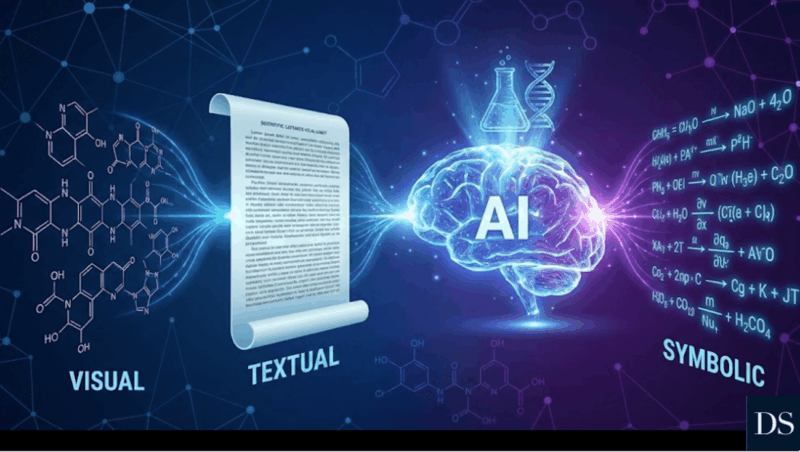
The rise of multimodal large language models (LLMs) marks a turning point in our ability to create AI systems that understand and synthesize knowledge expressed via multiple modalities, such as text, images, and symbolic notations. ChemVTS-Bench’s core innovation rests in its comprehensively designed evaluation methodology, which uniquely integrates visual, textual, and symbolic reasoning tasks tailored for chemistry. Traditional benchmarks tend to focus on isolated modalities, often overlooking the complexities involved in integrating different data forms. ChemVTS-Bench fills this critical gap by presenting a structured and nuanced approach that evaluates how effectively LLMs interpret chemical diagrams, written descriptions, and symbolic equations in unison. In fields like chemistry, where meaning is distributed across molecular graphics, equations, and contextual text, this is a crucial advance that brings AI closer to genuine scientific understanding.
This holistic perspective underpins the importance of developing AI systems that do not merely process inputs in a modular fashion but synthesize contextual meaning across varied information streams. For chemistry, this ability is essential for tasks ranging from smart literature review to educational tutoring and advanced computational discovery.

Technical Approach for Evaluating Multimodal Large Language Models
At the heart of ChemVTS-Bench lies a carefully curated suite of tasks designed to push the limits of multimodal large language models across three critical dimensions: visual, textual, and symbolic reasoning. Each dimension targets core elements of chemical knowledge representation and understanding:
- Visual Reasoning: Tasks require models to analyze chemical diagrams, such as reaction mechanisms, molecular structure depictions, and graphical abstracts, to extract semantic information essential for scientific inference.
- Textual Reasoning: This strand challenges models with nuanced reading comprehension questions rooted in descriptive chemistry, laboratory procedures, or contextual chemical phenomena, demanding deep linguistic and inferential skills.
- Symbolic Reasoning: Focused on the manipulation and understanding of chemical equations, structural formulas, and shorthand notations, this suite tests the model’s fluency with the precise syntax and semantics that define chemistry’s symbolic language.
Integration is achieved not just by juxtaposing these modalities but by presenting challenge items that require cross-modal synthesis. For example, interpreting a reaction schematic while referencing descriptive text and balancing symbolic equations. The dataset itself draws from hundreds of academic articles, educational resources, and domain-relevant benchmarks, ensuring both breadth and depth across organic, inorganic, analytical, and physical chemistry.
For those interested in digging deeper into technical details, see our guide to LLM benchmarks in chemistry.
Performance & Benchmarks Among Multimodal Large Language Models
To showcase ChemVTS-Bench’s rigor and importance, the development team evaluated a suite of cutting-edge multimodal large language models from major research groups, including OpenAI, Google DeepMind, and academic consortia. The experimental findings are revealing on several fronts:
- Textual Reasoning: Most state-of-the-art LLMs achieved high performance, with leading models surpassing 88% average accuracy on complex text-based questions, showing the maturity of language modeling in scientific domains where data is primarily textual.
- Visual Reasoning: Only the very best multimodal systems averaged 72% accuracy on tasks requiring chemical diagram analysis, indicating a sizable gap versus their textual capabilities. Many models struggled with subtle graphical conventions and multi-component diagrams common in research literature.
- Symbolic Reasoning: Accuracy in symbolic tasks generally lagged behind, reflecting the challenge of parsing and reasoning with formal chemical notation, especially when embedded alongside natural language or images.
Models pretrained explicitly on visual and symbolic data outperformed those relying mainly on textual corpora, underlining the necessity for rich, multimodal datasets and training strategies. The researchers established baseline scores for each task type, setting future targets for model developers and the broader AI community. Notably, even the best models exhibited brittle performance on particularly intricate, cross-modal challenge items, highlighting the current frontiers of multimodal AI research.

Implications: Transforming Chemistry and Beyond with Multimodal Large Language Models
The advent of ChemVTS-Bench holds far-reaching implications for science, technology, education, and society. A world where multimodal large language models can fluidly read, view, and “think” across formats could drive revolutions in how we teach, research, and apply chemistry.
For Education and Learning
AI tools equipped with ChemVTS-Bench-level reasoning skills can act as personal chemistry tutors, dynamically visualizing molecules, explaining reactions with both diagrams and text, and providing symbolic calculations. Interactive multimodal assessment can provide tailored feedback to students, making abstract concepts more accessible and addressing individual learning gaps. This could democratize chemistry education worldwide, providing equal access to high-quality resources irrespective of geographic or economic limitations.
For Scientific Research
Researchers stand to gain dramatically from robust multimodal AI: automated systems could parse journals, extract information from images and equations, and cross-reference vast scientific corpora for literature review or hypothesis generation. This would accelerate discovery by allowing scientists to handle the overwhelming flood of chemical data, streamline experimental planning, and facilitate interdisciplinary collaboration.
For Industry and Innovation
Industries in pharmaceuticals, materials science, and agrochemicals are poised to benefit as well. Automated multimodal LLMs could facilitate faster drug discovery through analysis of molecule databases, aid regulatory compliance with smarter data extraction, and optimize R&D with predictive modeling that considers both textual descriptions and structural diagrams. Enhanced information retrieval, patent analysis, and safety assessment all become more tractable problems when AI can reason across chemical modalities.
Broader Societal Impact
On a societal level, better multimodal large language models could empower citizen science, drive open-access scientific communication, and catalyze a new era of explainable, reproducible AI-driven research. Their transparency and ability to interactively demonstrate scientific reasoning could foster public trust, improve policy-making, and enable new partnerships between academia and other sectors. Explore more about AI in chemistry education.
In summary, ChemVTS-Bench represents more than just a benchmark; it is a catalyst for systemic improvements across education, research, and industry, accelerating the age of AI-literate chemistry.
Limitations & Risks of Multimodal Large Language Models in Chemistry
Despite its promise, ChemVTS-Bench and the evolution of multimodal large language models bring important limitations and risks to the fore. Understanding these nuances is essential for responsible and equitable deployment.
Dataset Bias and Representational Gaps
The ChemVTS-Bench dataset, while comprehensive, may inadvertently reflect biases present in its source materials—such as overrepresentation of Western chemical nomenclature or pedagogical philosophies. Marginalized topics or outlier experimental approaches may be underrepresented, risking a narrowing of model capabilities to dominant paradigms. Cultural and linguistic diversity in chemical approaches remains a challenge to capture fully, potentially sidelining non-traditional knowledge when deployed globally.
Generality Beyond Chemistry
The specialized design of ChemVTS-Bench means that its methodologies, findings, and insights may not transfer readily to other scientific fields, like physics or biology, without significant adaptation. There is a risk that benchmarks become siloed, slowing cross-disciplinary advances in multimodal AI. Furthermore, the heavy focus on accuracy may incentivize optimizing for benchmark metrics rather than developing models with true generalizable understanding or interpretability, a known pitfall in the history of AI competitions.
Interpretability, Robustness, and Trust
Multimodal large language models can sometimes produce superficially correct answers through statistical correlations rather than true reasoning, so-called “shortcut learning.” In high-stakes chemistry applications (e.g., safety assessments, drug design), such errors could have profound consequences. The focus on accuracy as a primary evaluation metric may overlook subtler aspects like model interpretability, robustness to adversarial inputs, or responsiveness to novel, real-world chemical problems. Overreliance on benchmarks may obscure these crucial dimensions.
Winners and Losers in the AI Revolution
There is a positive feedback loop where institutions with the resources to generate rich datasets and train advanced models further consolidate power. Smaller labs, developing-world universities, or educators lacking computing resources may be left behind. Industries able to capitalize on multimodal LLMs will outpace competitors in research efficiency and product discovery, potentially widening socio-economic disparities.
In sum, deploying ChemVTS-Bench and models trained thereon must proceed with careful attention to ethical distribution, transparency, and continual reassessment of fairness and global relevance. Read more about fairness in AI-driven science.
What’s Next: The Roadmap for Multimodal Large Language Models in Chemistry
The publication of ChemVTS-Bench is only the beginning. To realize the full potential of multimodal large language models in chemistry and beyond, researchers, developers, and educators must invest in targeted next steps.
Expanding the Dataset and Task Diversity
Future iterations of ChemVTS-Bench should broaden their dataset, embracing chemical knowledge from underrepresented fields, cultures, and languages. Collaborations with international chemistry associations and educators will ensure broader perspectives are captured. Incorporating tasks that measure creativity, critical thinking, and multi-step reasoning (beyond mere recall or recognition) will produce more robust, generalizable models. Adding multi-turn dialog tasks or dynamic, interactive challenges will further stretch model capabilities.
Developing Stronger Visual and Symbolic Reasoning
Technical advances are needed for multimodal large language models to truly “see” and “think” chemically. Integrating architectures like graph neural networks for molecular representations, or neural-symbolic hybrids capable of explicit equation manipulation, will boost performance on challenging cross-modal tasks. Specialized pretraining regimens that balance all three modalities and minimization of shortcut learning effects will produce both higher accuracy and greater interpretability. Community efforts to share more complex chemical diagrams and equations, with expert annotations, will be essential.
Benchmarks as Open, Living Ecosystems
Developers should treat ChemVTS-Bench as a living resource, updating it regularly with feedback from classroom use, lab integration, and industry deployment. Ensuring open access to data, tasks, and community-contributed challenge sets will democratize participation and speed collective improvement. Cross-disciplinary extensions, such as to biology or materials science, should be explored via similar multimodal frameworks.
Concrete Steps for Stakeholders
- Researchers should experiment with hybrid models and share findings with the ChemVTS-Bench community.
- Educators are encouraged to develop curricular modules leveraging LLMs, reporting success stories and pitfalls.
- Developers ought to design flexible, modular AI pipelines that can ingest new benchmark tasks and modalities with ease.
Finally, ongoing work on alignment, explainability, and robustness must proceed in parallel, guided by both technological feasibility and the evolving needs of the chemistry community.
Conclusion: Shaping the Future of AI With Multimodal Large Language Models
With ChemVTS-Bench, the development of multimodal large language models for chemistry takes a significant leap forward. By providing a rigorous, holistic, and practical benchmark, the initiative not only lays a competitive foundation for scientific AI but also signals the dawn of chemistry education and research powered by truly intelligent, multimodal assistants. The challenges ahead are significant, but the transformative potential of these models—to accelerate discovery, democratize expertise, and empower learners across the globe, is greater still. The era of multimodal LLMs in science has only just begun, and ChemVTS-Bench paves the way for a future where AI is an indispensable partner in every chemist’s toolkit.