


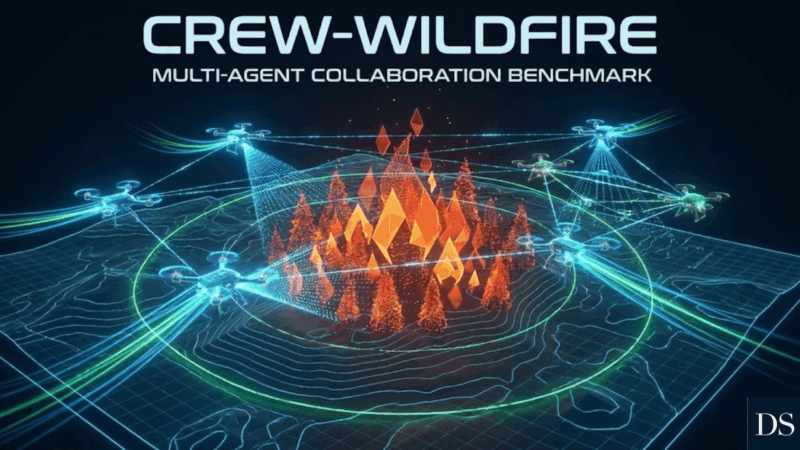
Multiagent systems lessons: In the realm of artificial intelligence, multi-agent systems are emerging as key players, especially in complex environments where collaborative decision-making is crucial. A recent advancement in this field is the CREW-WILDFIRE benchmark, which tackles the intricate nature of multi-agent collaborations in high-stakes scenarios mimicking real-world wildfire management. This benchmarking framework aims to propel our understanding of collaborative AI by providing a structured approach to evaluate the efficiency and effectiveness of agentic interactions. It addresses a critical gap in current AI research: the need for robust multi-agent solutions capable of performing in dynamics akin to natural disasters and similar high-pressure environments.
Understanding Multiagent systems lessons
Multi-agent systems are vital in scenarios where multiple autonomous agents must collaborate to achieve a common goal, such as firefighting or disaster management. The CREW-WILDFIRE benchmark provides a standardized environment to examine these systems, emphasizing the necessity for agents not only to work collaboratively but to strategically adapt to rapidly changing circumstances. This is particularly important in environments like wildfire scenarios where variables can shift unpredictably, requiring both flexibility and coordination from AI systems. When considering multiagent systems lessons, it’s important to understand the key aspects.
Key Multiagent systems lessons Benefits
The implications of CREW-WILDFIRE are far-reaching, impacting various sectors beyond emergency response. For enterprises and industries, the insights gained from this research can apply to areas such as autonomous vehicle management, where vehicles must negotiate real-time traffic conditions collaboratively, and robotic process automation, where multiple robotic agents must optimize operations efficiently. In essence, the benchmark serves as a testbed for developing AI systems that could significantly streamline operations, reduce human error, and enhance decision-making processes in complex scenarios.
How It Works
At its core, the CREW-WILDFIRE framework integrates advanced methodologies including simulation and reinforcement learning techniques. This framework strategically places agents in a simulated wildfire-ridden environment, challenging them to manage resources, respond to dynamic changes, and communicate effectively to contain fires. Agents are equipped with adaptive algorithms that reinforce learning through trial-and-error, continually optimizing their collaborative strategies. When considering multiagent systems lessons, it’s important to understand the key aspects.
The system also employs intricate communication protocols enabling agents to disseminate information about changing conditions and coordinate responses accordingly. Performance metrics such as containment efficiency, response time, and resource utilization measure the systems’ effectiveness, providing a comprehensive dataset to gauge the capabilities and limitations of multi-agent approaches.
Limitations, Risks, and Trade-Offs
While groundbreaking, the CREW-WILDFIRE benchmark does encounter several limitations. The primary challenge lies in the translation of simulated outcomes to real-world applicability, as simulations cannot fully model the unpredictability of actual wildfires or integrate the nuanced human decision-making processes inherent in such situations. Furthermore, there’s a dependency on the robustness of communication protocols among agents; suboptimal designs in this area could lead to disparities in system performance, misrepresenting a program’s true potential. When considering multiagent systems lessons, it’s important to understand the key aspects.
From a broader perspective, the ethical considerations of deploying autonomous agents in critical scenarios remain underexplored. Misjudgments or failures in coordination could have serious real-world consequences, necessitating stringent oversight and comprehensive testing before such systems are deployed operationally.
What Comes Next
As the field of multi-agent systems continues to develop, further research is needed to enhance the sophistication and reliability of these frameworks. Future pathways include integrating human agents into simulations to better model real-time decision-making and further developing communication protocols and learning algorithms to boost efficiency. Additionally, applying the CREW-WILDFIRE framework to other domains, such as supply chain logistics and healthcare, could yield significant benefits by fostering resilience and adaptability in these sectors. When considering multiagent systems lessons, it’s important to understand the key aspects.
Executive Takeaways
For executives, the critical takeaway from the CREW-WILDFIRE initiative is its role in highlighting the potential of multi-agent systems across various applications. While these systems show promising enhancements in efficiency and operational synergy, leaders must be cautious not to overestimate the applicability of simulation results to real-world contexts without thorough validation. Investigating the ethical, practical, and regulatory implications will be vital in ensuring these technologies contribute positively to enterprise operations and societal progress.
Ultimately, the CREW-WILDFIRE benchmark underscores the transformative promise of collaborative AI systems while delineating the work necessary to bring these innovations from theoretical frameworks to practical, ethical, and safe real-world applications.