

Stewardship outcomes.
Not delivery metrics.
What changes when a Steward is in the room is not a number on a dashboard. It is the quality of the decisions an organisation can make about AI — and the confidence with which it can defend them.
"The measure of stewardship is not what was built. It is what the organisation now knows how to decide."
The cases below do not show FTEs freed or call reduction percentages. They show what changed at the governance and decision level — the layer where stewardship actually operates.
Three sectors. Three different walls.
Each case is presented at the level where the stewardship intervention actually occurred — not in the technology layer, but in the decision and governance layer above it.
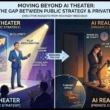
A Swiss private bank had been instructed by its board to develop an AI strategy. Internal teams had produced several pilot proposals, but every initiative stalled at the compliance gate. The legal and risk functions were not obstructing — they were asking legitimate questions that no one could answer: Which regulatory framework governs this? Who is accountable if an AI recommendation is challenged? How do we demonstrate explainability to FINMA?
The result was paralysis. AI became associated with regulatory risk rather than business value. The board's patience was finite. The CIO needed a framework that answered the compliance questions before they were asked — and a strategy that the risk function would co-own rather than veto.
Working directly with the CIO and the Chief Risk Officer across six weeks, we co-created a Sovereign AI Architecture — a governance framework that mapped every proposed AI use case to its specific regulatory obligation under FINMA circulars and the Swiss Financial Market Infrastructure Act. We established explainability and auditability standards before a single system was selected. We identified three vendor proposals that could not meet the sovereignty requirements and two that could, with specific architectural conditions.
The board left with a defensible AI governance framework and an approved 12-month roadmap — without any vendor having been selected. The risk function moved from veto to co-ownership. The CIO had answers to every compliance question the board raised. The organisation could now accelerate AI adoption precisely because the governance structure existed to contain the risk.
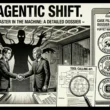
A Swiss MedTech innovator had developed a promising AI-powered diagnostic tool with strong clinical results in controlled settings. The path to market — specifically to CE marking under the EU Medical Device Regulation — had become intractable. Three separate vendors had each proposed different architectural approaches. Each claimed their approach was MDR-compliant. None could demonstrate it concretely.
The R&D team was technically capable but lacked the regulatory architecture expertise to evaluate the claims. The CEO was running out of runway. The critical decision — which architectural approach to commit to — was being deferred because no one had the cross-perspective authority to make the call.
We diagnosed the precise architectural decisions that were blocking MDR certification — a set of specific choices about data provenance tracking, model versioning, and audit trail architecture that none of the vendor proposals had addressed adequately. We produced a technical assessment of all three vendor proposals against the actual MDR requirements, identified the vendor whose approach could be made compliant with specific modifications, and designed an MVP-to-Scale architecture that gave the R&D team a concrete build path.
R&D understood precisely which architectural decisions were blocking certification — and which vendor claims were unfounded. The organisation had a clear, documented decision on which path to take and why. Six weeks of diagnostic work replaced eighteen months of vendor-led indecision. The team could now move with confidence rather than deferring a decision they did not have the framework to make.
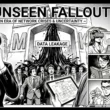
A European MVNO had invested significantly in AI over two years — across customer service automation, predictive churn modelling, and network optimisation. The CFO was asking a question no one could answer: what return are we actually getting? Each initiative had a vendor, a project manager, and a set of technical metrics. None had a clear connection to P&L.
The executive team had approved the programmes in good faith. But the AI portfolio had grown without a central logic. Three separate vendors each had contractual relationships with different parts of the organisation. There was no architectural coherence, no governance structure, and no mechanism for the executive team to make an informed decision about what to continue, what to fix, and what to stop.
We delivered a strategy-led portfolio assessment — mapping every active AI programme against its stated business objective, its actual cost, and its measurable contribution to revenue or cost reduction. We identified two programmes that had no credible path to P&L impact and recommended their cancellation. We identified one programme — the customer service automation — that was structurally sound but had been deployed without the change management required for adoption, and produced a recovery roadmap. We designed a vendor-independent architecture for the surviving programmes that eliminated the external call centre dependency.
The executive team could account for every euro of AI investment and knew exactly which programmes to stop, fix, or scale. The CFO had a clear, documented ROI framework for the surviving portfolio. The organisation could now accelerate investment in what was working and stop funding what was not — with full board visibility and zero vendor dependency in the governance structure.
"The organisations I work with do not lack ambition. They lack a governance structure that lets ambition move at the speed of the technology."
Every regulated organisation in Switzerland is under the same pressure: AI is moving faster than governance frameworks can adapt. FINMA, Swissmedic, and the EU AI Act are all asking questions that most organisations cannot yet answer concretely — not because the technology is wrong, but because the governance layer above the technology has not been built.
Stewardship is the process of building that governance layer — in parallel with technology delivery, not after it. The impact shows up not in the technology metrics but in the organisation's capacity to make consequential AI decisions with confidence, speed, and accountability.
See the services →Your situation is specific.
Let us find out together.
A free 30-minute Executive AI Triage identifies where you are in the journey and whether a stewardship engagement makes sense for your organisation.