
Introduction
Deepfakes, synthetic media generated using artificial intelligence, have graduated from internet novelty to a top-tier threat against organizational reputation, legal standing, and operational resilience.
As Generative AI tools democratize the creation of hyper-realistic video and audio, the barrier to entry for fraud and disinformation has collapsed. Security teams and executives are now asking the inevitable question: can we automate the detection of these threats?
A recent comprehensive analysis, “Is That Video Real? 7 Telltale Signs It’s an AI Deepfake”, provides a valuable survey of the current forensic landscape. It catalogs the visual artifacts, such as unnatural blinking or lighting inconsistencies, that betray a fake. However, for the enterprise, relying on human visual inspection is not a strategy; it is a liability.
This post translates those forensic indicators into an executive context. We analyze the current state of deepfake detection technology, assessing its real-world applicability versus its limitations. We move beyond the “telltale signs” to explore the architectural, legal, and ethical “maturity gap” that currently exists between laboratory benchmarks and at-scale enterprise deployment.
Key Executive Takeaway: Deepfake detection is not yet a “plug-and-play” security layer. It is a complex statistical judgment requiring governance, human oversight, and a clear understanding of failure modes.
The State of the Art: An Emerging Signal
To make informed investment decisions, leaders must first understand the maturity of the landscape. The insights from recent research constitute an emerging signal, not a settled standard.
While current detection methodologies can aggregate substantive indicatorssuch as pixel anomalies or audio frequency mismatches, they represent a synthesis of existing forensic approaches rather than a structural breakthrough. The core challenge for the enterprise is the maturity gap: detection models that perform with >90% accuracy in controlled laboratory benchmarks frequently degrade when exposed to the high-variance, compressed, and chaotic video data found in real-world business operations.
The Proof of Risk: Real-World Failures The gap between “visual artifacts” and “enterprise risk” is best illustrated by recent failures where human senses, and standard processes, were overwhelmed.
-
The $25M Conference Call (Arup, Hong Kong): In early 2024, a finance worker transferred $25 million after a video conference where every other participant, including the CFO, was a deepfake. The visual fidelity was sufficient to defeat human inspection on a live stream, proving that “looking closely” is no longer a viable control.
-
The Ferrari “Near Miss”: A deepfake of Ferrari CEO Benedetto Vigna attempted to solicit funds for a “secret acquisition.” The attack was foiled not by software, but by an executive asking a personal question about a book the CEO had recently read. This highlights that currently, contextual verification often outperforms technical detection.
-
WPP CEO Voice Clone: Attackers used a voice clone of Mark Read, CEO of the world’s largest ad group, in a failed attempt to authorize a new business venture.
The Core Distinction: Probabilistic vs. Deterministic Unlike traditional cybersecurity measures (such as hashing or digital signatures) which offer binary, deterministic verification (Pass/Fail), deepfake detection is probabilistic.
-
Traditional Auth: “This file matches the original checksum perfectly.” (100% Certainty)
-
Deepfake Detection: “There is an 82% statistical probability that this video contains synthetic artifacts.” (Uncertainty)
For an executive, this distinction is critical. Implementing a probabilistic tool into a binary workflow (e.g., “Block all fakes”) will inevitably result in False Positives (blocking legitimate CEO communications) or False Negatives (allowing a fraud attempt like the Arup case). Therefore, this is not just a technology deployment; it is a risk management exercise.
Strategic Impact & Risk Domains
Deepfake risks are not siloed within the IT department; they crosscut every major enterprise domain. Video-based misinformation and synthetic identity attacks now affect strategic communications, regulatory interactions, and crisis management.
For the modern enterprise, the risk landscape is best understood through the lens of functional leadership:
-
Security & Risk (CISO/CRO) – Fraud Evolution: The most immediate threat is “Business Email Compromise (BEC) 2.0.” As seen in the Arup case, attackers use real-time deepfakes to bypass traditional voice or video verification protocols. This directly impacts wire transfer authorizations, password resets, and high-privilege access requests.
-
Legal & Compliance (General Counsel) – Regulatory Liability: Executive leadership and boards are increasingly accountable under frameworks that do not distinguish between traditional and synthetic media. In regulated sectors (Finance, Healthcare, Energy), failing to detect a deepfake could lead to breaches of SEC disclosure rules (if fake news moves stock prices) or GDPR/biometric privacy laws (if employee data is processed illicitly).
-
Brand & External Affairs (CMO) – Reputation Warfare: Marketing leaders must now anticipate “Brandjacking”, where a CEO’s likeness is used to endorse fraudulent products or make controversial political statements. The speed of social media means the reputational damage often occurs before the video can be technically debunked.
-
Human Resources (CHRO) – Workforce Protection: Internally, the risk extends to harassment (non-consensual deepfakes of employees), forged training collateral, or even “fake candidates” using real-time face swaps during remote interviews to infiltrate the workforce.
The Fiduciary Shift: Deepfake detection and response has evolved from a technical “nice-to-have” to a matter of fiduciary and regulatory compliance. Ignoring the signal is no longer an option.
The Technology: An Adversarial Arms Race
To understand the limitations of current detection tools, leaders must grasp the underlying architecture. Most detection models are trained to identify artifacts (statistical inconsistencies left behind by the generative process).
In high-quality deepfakes, these artifacts are rarely visible to the human eye. Instead, detectors look for mathematical irregularities, such as:
-
Temporal Inconsistencies: Jitter or flickering in the facial area across video frames.
-
Biometric Mismatches: Incongruence between audio frequency and lip movement (phoneme-viseme mismatch).
-
Lighting Physics: Reflections in the eyes (corneal specular highlights) that do not match the environment’s light source.
The GAN Dilemma: Automated Evolution The reason deepfake quality improves so rapidly is rooted in the architecture often used to create them: Generative Adversarial Networks (GANs). This framework pits two AI models against each other in a continuous loop:
-
The Generator (The Forger): Creates synthetic video data.
-
The Discriminator (The Detective): Evaluates the video against real data to classify it as “real” or “fake.”

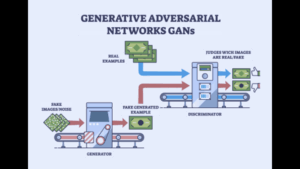
If the Discriminator successfully spots a fake, the Generator uses that feedback to adjust its parameters and try again. This creates a persistent arms race: the very technology used to detect deepfakes is simultaneously used to train them to be undetectable.
Operational Fragility: The Robustness Problem In a laboratory setting, detectors analyze raw, high-quality video. In the enterprise, however, video is processed through “lossy” compression pipelines (e.g., Zoom, Microsoft Teams, WhatsApp).
-
The Technical Reality: Compression algorithms function by discarding “unnecessary” pixel data. Unfortunately, the subtle artifacts that detectors rely on are often the first details to be scrubbed away by compression.
-
The Consequence: A detector that achieves 95% accuracy on raw video may see its reliability plummet when analyzing a recorded Teams meeting, as the “evidence” has been compressed out of the file. This is not a software bug; it is a fundamental constraint of signal processing.
Architectural and Organizational Boundary Conditions
Integrating deepfake detection into an enterprise environment is fundamentally more complex than deploying it on a social media platform. It is not merely a software installation; it is a workflow integration that triggers significant data privacy and governance obligations.
Core enterprise architectural concerns include:
1. Data Security and Privacy (Biometric Compliance) Processing video content to detect deepfakes often involves analyzing facial geometry and voice prints. Under frameworks like GDPR (Europe) or BIPA (Illinois, USA), this can be classified as processing biometric data.
-
The Risk: If detection systems ingest, transfer, or retain employee video data without specific consent or data sovereignty controls, the organization may inadvertently violate privacy laws.
-
The Requirement: Legal teams must validate that the vendor’s API does not train its public models on your private executive communications.
2. Enterprise Data Flow Integration For detection to be effective, it cannot sit in a silo. It must be embedded into the “middleware” of communication, where content is actually shared.
-
The Challenge: Most deepfake tools are currently standalone web apps. However, enterprises need integration into Email Secure Gateways (SEG), Video Conferencing platforms (Zoom/Teams/Webex), and Collaboration tools (Slack/Microsoft 365).
-
The Requirement: Architectural readiness means ensuring APIs are compatible with existing IT security policies (e.g., encryption in transit, zero-trust access).
3. Process and Control Ownership (The Escalation Protocol) The most critical failure point is often procedural, not technical. If an automated tool flags a CEO’s urgent video message as “High Risk,” who has the authority to block it?
-
The Governance Gap: Ad hoc deployments without formal escalation trails create operational paralysis.
-
The Requirement: Defined “Human-in-the-Loop” protocols. Responsibility for confirming a flagged deepfake should not rest with a junior IT analyst but must escalate to a pre-designated response team involving Legal and Comms.
4. Organizational Readiness and “Alert Fatigue” As noted in the technical section, these tools yield false positives.
-
The Risk: If legitimate videos are frequently flagged, employees will develop “alert fatigue” and bypass the security controls entirely.
-
The Requirement: Non-technical staff require mindful onboarding. Without training on why a video was flagged, end-users will view the detection tool as an obstruction to productivity rather than a safety measure.
Benchmarks vs. Reality: A Skeptical View
The PCMag article and similar vendor white papers often cite detection accuracy rates above 90% or even 99%. While these figures are technically accurate within the context of academic benchmarks (such as FaceForensics++ or the DeepFake Detection Challenge), they are dangerously misleading if taken as a guarantee of enterprise performance.
For the executive, “99% accuracy” in a lab often translates to “operational failure” in the wild due to three specific blind spots:
1. The “In-the-Wild” Gap Benchmark models are typically tested on the same datasets they were trained on, often high-quality videos with standard lighting.
-
The Reality: When these models encounter “unseen” data, such as a grainy webcam video recorded in low light, performance degrades rapidly. A 2024 analysis of deepfake detectors showed that while some models achieve near-perfect scores on specific datasets, their accuracy can drop by 20-30% when tested on cross-domain video data that mimics real-world conditions.
2. The Compliance Trap: Demographic Bias This is the most significant unaddressed risk for Legal and HR leaders. Most training datasets are heavily skewed toward Caucasian subjects. When these models are deployed on a diverse global workforce, they exhibit severe bias.
-
The Data: Research from the University at Buffalo (2024) and others highlighted a staggering disparity: in some tests, detection algorithms misclassified videos of Black subjects as “fake” up to 39% of the time, compared to just 15% for White subjects.
-
The Liability: Relying on such a tool for employee verification or hiring isn’t just a technical glitch; it is a vector for automated discrimination lawsuits and regulatory non-compliance.
3. Adversarial Blind Spots (Zero-Day Fakes) Detectors look for known artifacts. If a new generation of deepfake technology emerges tomorrow (e.g., a new diffusion model that handles lighting differently), today’s detectors will miss it entirely.
-
The Risk: In the enterprise, this “Zero-Day” gap is where the most sophisticated attacks (like the Arup CFO deepfake) occur. Attackers do not use off-the-shelf tools; they use custom models specifically tuned to bypass standard detection filters.
Time Horizon and Maturity: The 12–36 Month Outlook
The field currently stands at the interface between early experimentation and pilot adoption. For the enterprise, the timeline for deployment is dictated not by the speed of AI innovation, but by the speed of governance and reliability.
-
Now (Pilot Phase): Integration is currently feasible only for high-stakes, low-volume use cases with mandatory human oversight (e.g., validating wire transfers >$50k).
-
12–36 Months (Operational Maturity): Broad, automated use—especially for real-time monitoring of video conferences or high-volume content moderation—remains 1 to 3 years away for most sectors.
What Needs to Change? Widespread adoption will require advancements in generalization (handling new attack types without retraining) and standardization (industry consensus on acceptable error rates). Until regulatory bodies define what constitutes “reasonable” defense, many organizations will hesitate to deploy tools that generate legal liability through false positives.
Executive Takeaways: Judgment, Not Just Tools
Leaders should regard deepfake detection as a strategic capability that cuts across risk, ethics, and brand—not merely a software license for the CISO.
-
Skepticism is a Strategy: Current detection methodologies represent meaningful progress but remain limited by the “Maturity Gap.” Overconfidence in benchmarked performance exposes the organization to undetected threats and misguided trust.
-
Process Over Pixel Peeping: Do not rely on technology to solve a process problem. The most effective defense today is contextual verification (e.g., “If the CEO requests a transfer via video, call their mobile to confirm”).
-
Monitor the “False Positive” Signal: The core metric for future adoption is not detection accuracy, but the reduction of false positives. Until a tool can run without disrupting legitimate business flow, it is not ready for scale.
-
Don’t Wait to Govern: While the software matures, the policy must be written today. Establishing who owns the risk (Legal vs. IT vs. Comms) is an immediate priority.
The Immediate Next Step
The most high-value action for leadership is not to purchase a detection tool, but to update the Incident Response Plan.
Ask your CISO today: “If a compromising video of a C-suite executive surfaces tomorrow morning, do we have a pre-agreed protocol to verify its authenticity and issue a holding statement within 60 minutes?”
If the answer is no, the technology won’t save you.