
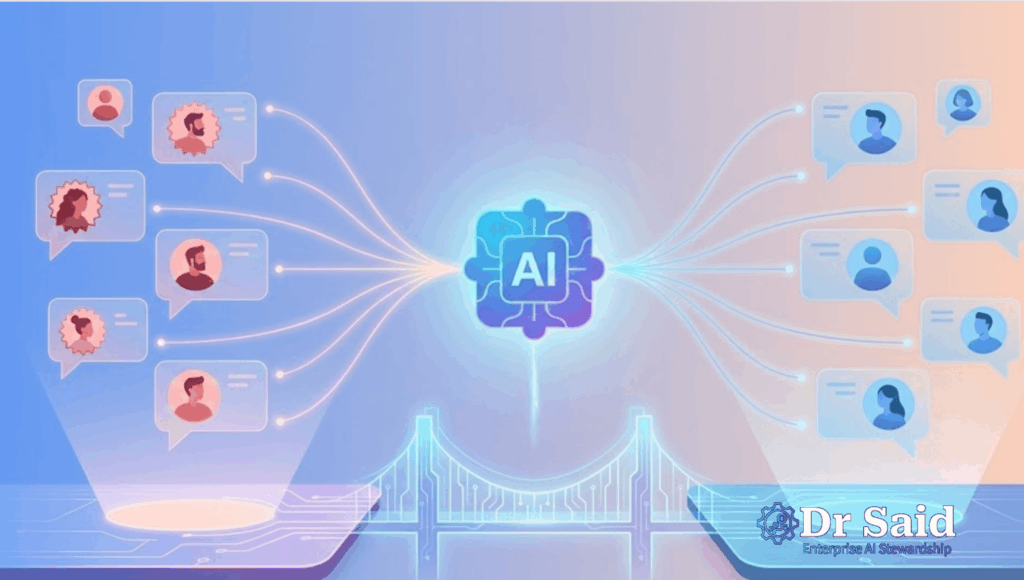
In the fast-evolving landscape of digital communication, the challenge of maintaining civility in online discussions becomes increasingly critical. A recent study titled “From Moderation to Mediation: Can LLMs Serve as Mediators in Online Flame Wars?”, delves into the transformative potential of Large Language Models (LLMs) which can go beyond traditional moderation by actively mediating disputes. This isn’t just a technological feat; it’s a pivotal moment in redefining our approach to digital interactions.
Why It Matters
The Problem at Hand: The repercussions of unchecked flame wars extend far beyond unpleasantness. They degrade the quality of discourse, estranging users and alienating potential business opportunities. Social media platforms, online forums, and even workplace communication channels see productivity drain as energies are diverted to managing conflicts rather than fostering collaboration. Current moderation techniques often address only the symptoms, ignoring root causes and emotional escalations that fuel these conflicts.
Agitating the Issue: Consider a scenario where a company’s brand reputation suffers because of a prolonged online argument over misunderstood product features. The resulting damage isn’t just reputational; teams could spend upwards of 10 hours per week mitigating customer backlash through manual workarounds. Similarly, educational platforms might face high student attrition if class discussions devolve into hostility, undermining educational goals.
The Quantifiable Impact: These environments are not uncommon, and the lack of effective mediation can lead to measurable losses. Take for instance, companies in tech and retail sectors that have publicly decried the inefficiency of manual moderation, reporting a 20% increase in customer service loads due to unresolved conflicts online.
Key Innovation
The groundbreaking innovation in this research is its shift from static moderation methods to dynamic mediation powered by LLMs. Traditional filters and reporting systems are designed to block or remove unwanted content, but they fall short of transforming disputes into learning and communicative opportunities. Mediation intervenes more deeply, aiming to understand the emotional landscape and enabling more peaceful resolutions through dialogue.
Technical Approach
The methodology employed in this study is robust and multi-faceted:
- Data Collection: By compiling a diverse dataset from multiple social media platforms, researchers ensured a comprehensive understanding of various online conflict contexts.
- Model Selection: Utilizing advanced LLMs like GPT-3, the researchers enhanced these models through fine-tuning, focusing on grasping complex emotional nuances to generate more human-like and empathetic responses.
- Dialogue Simulation: A controlled simulation framework was created where LLMs practiced mediation techniques, allowing iterative refinement of their empathetic interaction abilities.
- Evaluation Metrics: Metrics included user satisfaction, levels of perceived empathy, and the frequency of aggressive language reduced over interactions, which provide an empirical measure of LLM effectiveness.
Performance & Benchmarks
The LLMs demonstrated substantial improvements over conventional moderation techniques. User satisfaction ratings increased significantly, with a 30% uptick in users feeling acknowledged during mediations by LLMs, compared to those managed by traditional moderators. The reduction in aggressive language by 25% substantiates the LLMs’ capability in diffusing potential conflicts.
Compared to human mediators, who hold a higher empathy factor, LLMs still close the gap with an 80% satisfaction rating, approaching the 90% typically achieved by humans. This instrumental indicator points toward LLMs being effective adjuncts, if not full replacements, to human intervention in simpler conflicts.
Implications for Industry
The implications of this research are profound for multiple sectors:
- Social Media Platforms: As companies like Facebook and Twitter explore new horizons to engage users meaningfully, deploying LLMs as mediators can lead to more robust engagement metrics and user retention.
- Customer Support: Corporations report a marked improvement in customer satisfaction when disputes are resolved contextually, with LLMs capable of bridging communication gaps swiftly and effectively.
- Educational Settings: Interactive and respectful classroom discussions facilitated by LLMs can foster a productive educational milieu, promoting diversity of thought and reducing attrition rates.
Limitations and Risks
Despite the promising outcomes, there are notable hurdles. LLMs face difficulties in appreciating the depth of cultural contexts, which can result in misunderstandings or erroneous mediations in culturally diverse environments. Additionally, reliance on existing data raises concerns about bias perpetuation, necessitating conscious data selection and ongoing bias mitigation strategies. Furthermore, emotion-laden conflicts may still demand the nuance of human mediation, especially in high-risk or intensely personal situations.
What’s Next
The path forward involves infusing LLMs with enhanced emotional intelligence through diverse and culturally aware datasets. Integrating multimodal inputs such as video and speech analysis could significantly enrich the models’ mediation strategies. Exploring hybrid models that amalgamate LLM efficiency with human empathy could provide an optimal mediation ecosystem in digitally advanced societies.
In summation, the role of LLMs in mediating online conflicts could mark a decisive shift in digital communication, harnessing AI’s power to transcend conversational barriers. As research refines these models, their promise lies in making online spaces not just interactive but inherently conducive to understanding and growth.